Introduction
The modern kitchen is increasingly focused on efficiency and versatility. Many people find themselves juggling busy schedules, health-conscious goals, and the desire to prepare quality meals at home without complicated equipment. This has created a growing market for compact, powerful blending solutions that can handle multiple tasks without taking up excessive counter space.
Personal blenders occupy an interesting niche in the kitchen appliance landscape. They’re designed with the understanding that not every household needs commercial-grade equipment, yet many people still want reliable performance for daily use. These appliances have evolved significantly over the past decade, moving beyond simple juice-making machines to become multi-functional tools capable of handling frozen ingredients, nuts, grains, and more.
Understanding what makes a personal blender effective involves looking at several key factors: motor power, blade design, capacity options, and build quality. Each of these elements contributes to how well the appliance performs across different tasks and how long it remains functional under regular use. This article explores what to consider when evaluating personal blender options, with particular attention to how specific design features impact real-world performance.
Key Features and What They Mean
Motor Power and Speed
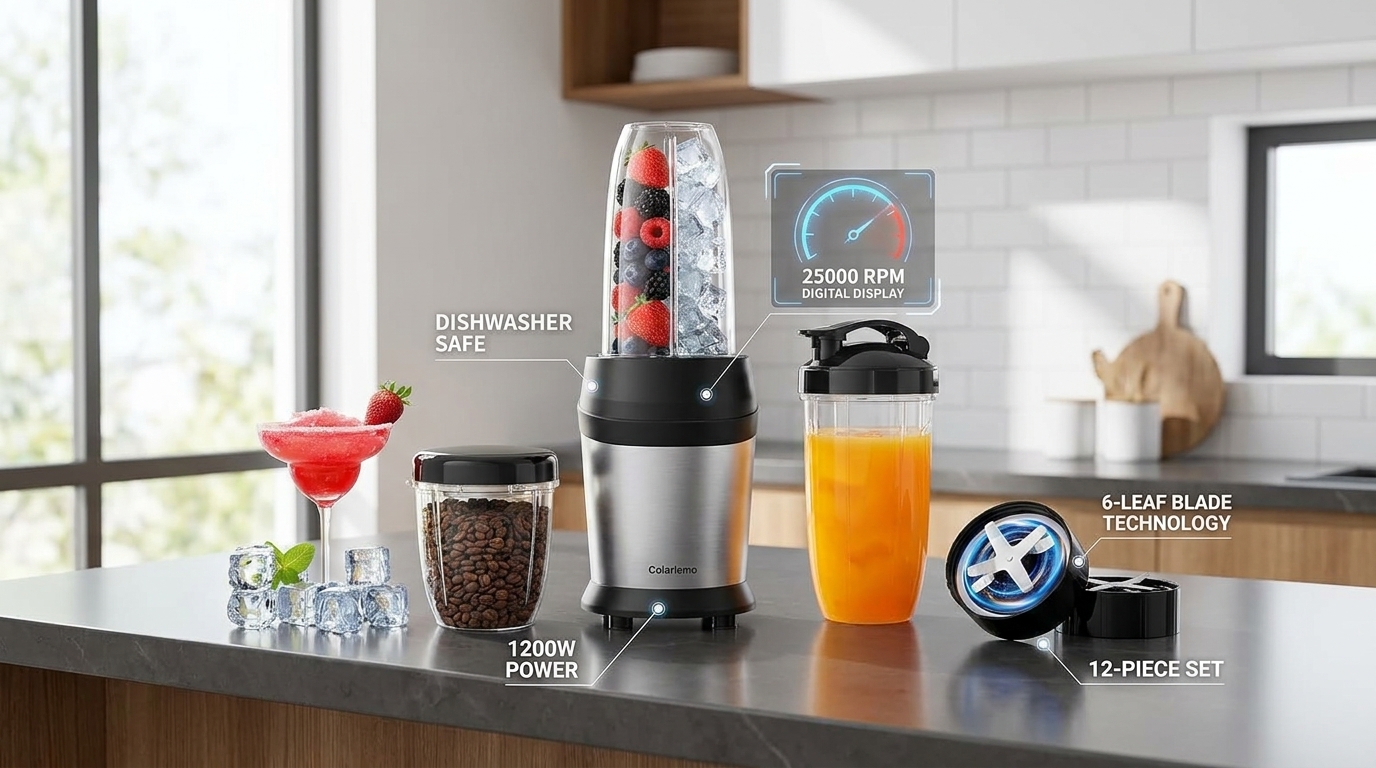
One of the most frequently discussed specifications in blender discussions is wattage, typically measured in watts. A 1200-watt motor represents a mid-to-upper range of power for personal blenders. To understand what this means in practical terms, motor power directly influences the blender’s ability to break down tough ingredients.
The relationship between wattage and performance isn’t always straightforward. While higher wattage generally enables faster processing and the ability to handle more challenging ingredients, the actual efficiency also depends on blade design, motor type, and how the motor transfers power to the blades. A 1200-watt motor operates in a power range that allows for processing both soft and harder ingredients without creating excessive noise or heat buildup during extended use.
Revolutions per minute, or RPM, indicates how quickly the blades rotate. The 25,000 RPM specification represents a fairly high-speed operation for personal blenders. Higher speeds generally mean faster processing times and finer results, particularly for ingredients that benefit from longer blending, such as frozen fruits or nuts being ground into butters.
However, it’s worth noting that maximum RPM isn’t always sustained throughout the blending cycle. Most motors vary their speed based on the load and resistance of the ingredients being processed. Heavy, dense ingredients create more resistance, which can cause the motor to work harder and potentially reduce speed slightly, while lighter ingredients may allow for closer-to-maximum speed operation.
Blade Configuration
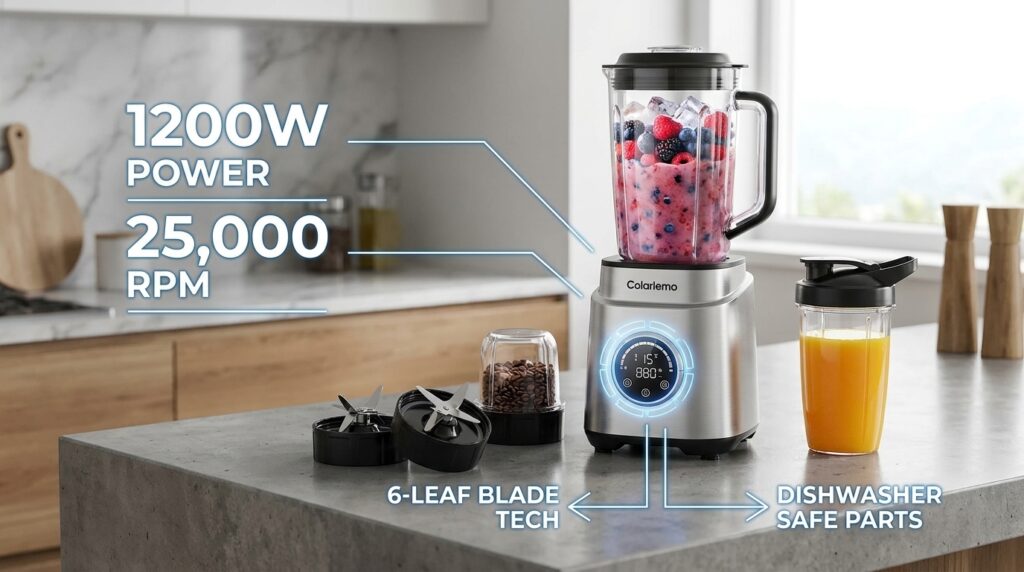
The inclusion of two sets of six-leaf blades represents a thoughtful design choice. Multiple blade sets allow for replacement when blades dull over time, extending the appliance’s usable lifespan. Understanding blade design is important because blades determine how efficiently the motor’s power is converted into cutting and blending action.
Six-leaf blade designs typically offer a balance between cutting power and the smoothness of the blending action. More blades can provide more cutting surfaces, which means faster processing of certain ingredients. The design of blade geometry—angles, thickness, and how they’re oriented—significantly impacts both the speed of blending and the quality of the final result.
The inclusion of two blade sets suggests consideration for extended use without immediate replacement needs. Over time, with regular use, blade edges can become slightly less sharp, impacting processing efficiency. Having a spare set means users can continue using the blender immediately while considering blade replacement options.
Multiple Cup Configurations
The provision of three different cup sizes reflects an understanding that blending needs vary. Some days, a user might need a single-serving smoothie. Other occasions might call for preparing a slightly larger batch for two people or for preparing an ingredient like nut butter that benefits from a bit more volume for efficient processing.
Smaller cups generally lead to more contact between the blades and ingredients, which can result in faster, more efficient blending for single servings. Larger cups allow for batch preparation but may require slightly longer blending times for achieving consistent texture throughout. Having capacity options eliminates the need to repeat the blending process for multiple servings while also avoiding the inefficiency of using a large container for a small amount of ingredients.
Different cup sizes also mean different footprints for storage. For households with limited cabinet space, having appropriately sized containers for different needs prevents waste and makes storage more practical.
Dishwasher Safety
Most of the removable components of personal blenders eventually need cleaning, and dishwasher-safe parts represent a significant convenience factor. This feature affects the maintenance experience of using the appliance regularly. While hand-washing blades requires care to avoid cuts, dishwasher-safe components reduce the manual labor involved in daily maintenance.
The ability to safely clean components in a dishwasher is particularly relevant for people who use their blender frequently. Someone preparing a smoothie each morning will appreciate simplified cleaning compared to hand-washing multiple components regularly.
Practical Applications and Use Cases
Beverage Preparation
The most obvious application for a high-speed personal blender is creating smoothies and blended drinks. The motor power and blade design work together to break down frozen fruits, leafy greens, and protein powders into smooth, integrated beverages.
Frozen ingredients present particular challenges for blending equipment. The hardness and cold temperature of frozen fruits requires significant power to break down efficiently. A motor in this power range can typically handle frozen berries, frozen bananas, and other frozen fruits without requiring extended blending times or risking motor strain.
Leafy greens, particularly tougher varieties like kale and chard, benefit from high-speed blending. The combination of blade design and motor speed helps break down the cellular structure of these vegetables, making them more easily digestible and better incorporated into the final beverage.
Adding liquids like milk, juice, or yogurt to frozen fruits and vegetables creates the suspension that makes the blending process work. The motor and blade combination must efficiently move these liquid-based mixtures around the container to ensure all solid ingredients come into contact with the blades.
Nut and Seed Processing
Beyond beverages, high-speed blenders function well for processing nuts and seeds into various forms. Grinding almonds into flour, creating peanut butter, or processing seeds into a fine powder are tasks that require sustained power and efficient blade action.
Processing nuts and seeds to a powder or butter requires the ingredients to be processed long enough to break down cell walls and release natural oils. The heat generated during extended grinding is typically managed by the motor’s design and the user’s ability to pulse the blender rather than running it continuously.
Different results emerge depending on processing duration and technique. Short bursts can create coarser textures useful for granola or grain toppings. Longer, sustained blending moves toward smoother, butter-like consistency.
Dry Ingredient Processing
Personal blenders with appropriate power can grind dried grains, coffee beans, spices, and other dry ingredients. While high-speed blenders aren’t typically considered grain mills, they can handle lighter grinding tasks for ingredients like oats or pulses.
The key consideration for dry blending is that the blades must create sufficient friction and impact to break down the items being processed. With appropriate blade design and motor power, this becomes feasible for household quantities of most dry ingredients.
Frozen Desserts and Granitas
Beyond traditional smoothies, powerful personal blenders can be used to create frozen desserts. Blending frozen fruit with small amounts of liquid creates thick, soft-serve-like textures. Adding yogurt or other dairy products creates frozen yogurt-like consistency.
The ice-crushing capability mentioned in product specifications relates directly to this application. While crushed ice and frozen desserts require the same basic motor and blade capabilities, the specific mention of ice-crushing suggests the appliance is engineered to handle this demanding task efficiently.
Soup Creation Through Heat Generation
Some high-speed blenders can create friction heat during extended blending of ingredients. When certain wet ingredients are blended at high speed for an extended period, the friction can raise the temperature of the mixture. This property has led some users to experiment with creating warm soups directly in the blender, though this isn’t typically the primary marketed use for personal blenders.
Who This Type of Appliance Might Suit
Health-Conscious Individuals
People focusing on incorporating more fruits and vegetables into their diets often find personal blenders valuable. The efficiency of converting whole fruits and vegetables into beverages that are easy to consume aligns well with nutritional goals. Someone starting a morning routine that includes a vegetable-based smoothie would benefit from a reliable appliance that handles this task efficiently.
People with Limited Kitchen Space
Urban dwellers, students, and anyone with limited counter or cabinet space appreciate compact appliances. Personal blenders offer functionality without the footprint of full-size blenders. The inclusion of multiple cup sizes means that one appliance can serve several purposes typically handled by larger equipment.
Active Individuals and Athletes
Post-workout nutrition has popularized smoothies and protein-based beverages. People engaged in fitness routines often find quick access to blended recovery drinks useful. A reliable personal blender makes this process faster and more convenient than relying on commercial smoothie services.
Individuals with Dietary Preferences
People following plant-based diets, managing food allergies, or maintaining specific nutritional regimens often prepare their own beverages and food items. The ability to precisely control ingredients through home blending appeals to this group. Making nut butters, seed milks, and smoothies at home provides control over additives and customization options.
Busy Professionals
For people with demanding schedules, quick meal preparation is valuable. A high-speed blender can convert raw ingredients into nutritious meals or beverages in minutes, supporting quick meal preparation goals.
Persons Managing Specific Health Conditions
Individuals with certain dietary needs, swallowing difficulties, or digestive challenges may benefit from blended food options. Smooth, well-blended textures can make vegetables and other nutrients more accessible.
Important Considerations Before Use
Ingredient Selection and Preparation
Understanding which ingredients work well in personal blenders improves results and protects equipment. Soft fruits, leafy greens, and most liquids are ideal. Harder whole vegetables might benefit from pre-cutting into smaller pieces to reduce initial strain on the motor.
Extremely hard items like whole nutmeg or very large, dense vegetables can challenge personal blenders. While not necessarily harmful, processing these items may extend blending times or require more motor effort.
Noise Levels
High-speed blenders operate at significant noise levels, particularly when processing hard ingredients like frozen fruit or ice. Users should be mindful of this when using the appliance in shared living spaces or during early morning hours.
Heat Management
Extended blending sessions can generate heat. The blender’s design typically manages this through motor design and material selection, but users should understand that blending a large quantity of ice or processing for extended periods will warm both the motor and the contents of the container.
Jar Quality and Durability
The material of the blending container affects durability and longevity. Thicker, higher-quality materials resist cracking better than thinner plastic. Even well-made containers can eventually develop small cracks if exposed to rapid temperature changes or impact.
Maintenance Requirements
Regular cleaning immediately after use prevents residue from drying and becoming difficult to remove. While dishwasher-safe components simplify cleaning, most manufacturers recommend avoiding dishwashing the sealed motor base and the blade assemblies themselves for longevity.
Periodic checks of blade sharpness and any visible wear on seals or gaskets can identify maintenance needs before they impact performance.
Power Requirements and Cord Management
A 1200-watt appliance requires adequate electrical supply. Users should verify that their kitchen outlet can handle this power draw, particularly if other high-wattage appliances are in use simultaneously. Proper cord placement prevents tripping hazards and wear on the cord itself.
Warranty and Support
Understanding the warranty coverage helps users know what issues are covered and for how long. Most manufacturers offer specific support channels for questions or issues, which become valuable if problems arise.
How Personal Blenders Compare Across Categories
The blender market encompasses several distinct categories, each with different design goals and target users. Understanding these categories and how they compare provides context for personal blender applications.
Personal Blenders vs. Full-Size Blenders
Full-size blenders, often called countertop blenders, typically feature larger containers holding 64 ounces or more and more powerful motors. They’re designed for preparing large batches and handling tougher jobs. However, they require more storage space and are overkill for households focused on single-serve preparation.
Personal blenders sacrifice batch capacity but gain convenience through their compact size and simpler operation. For someone preparing one or two smoothies daily, a personal blender is more practical than maintaining a larger appliance. The simpler operation and faster cleanup of personal blenders appeals to people with straightforward blending needs.
Personal Blenders vs. Immersion Blenders
Immersion blenders, also called hand blenders or stick blenders, operate differently from traditional blenders. Rather than the ingredients moving around stationary blades, immersion blenders feature rotating blades that the user places into ingredients. They’re excellent for pureeing soups directly in pots and creating small batches of smoothies.
However, immersion blenders typically handle frozen ingredients less effectively than personal blenders and require the user to provide input through hand positioning. Personal blenders operate independently through automated cycles, making them more hands-off once ingredients are added.
Personal Blenders vs. Food Processors
Food processors feature different blade designs optimized for chopping, slicing, and mixing rather than creating smooth, integrated blends. While powerful food processors can handle some grinding tasks, they’re typically not ideal for creating smooth beverages. Food processors work better for chunky preparations, while blenders create smooth results.
The blade designs are fundamentally different. Food processor blades are designed to impact and separate ingredients, while blender blades are designed to circulate and break down ingredients into very fine particles.
High-Speed Personal Blenders vs. Standard Personal Blenders
The specification of 25,000 RPM places this device in the high-speed category. Standard personal blenders might operate at 15,000 to 18,000 RPM. The higher speed means faster processing and ability to handle demanding ingredients more efficiently.
High-speed blenders tend to create smoother, more finely textured results and can process tougher ingredients more effectively. However, the difference in price between standard and high-speed personal blenders has narrowed in recent years, making the performance and feature differences more nuanced.
Frequently Asked Questions
How loud are high-speed personal blenders? High-speed blenders operate at noise levels typically ranging from 85 to 95 decibels, comparable to a typical lawnmower or heavy traffic. This is considerably louder than conversation. Users should be aware of this when selecting a blender, particularly if using it early morning or in quiet environments. Placing the blender on a towel can provide modest noise reduction through vibration dampening.
Can personal blenders heat ingredients through friction? Extended blending of thicker mixtures can generate heat through friction. The degree of heat generation depends on the duration of blending and the resistance of ingredients. While some users successfully create warm soups through blending, this isn’t typically the primary design purpose of personal blenders, and sustained use of this type should be limited to avoid potential strain on the motor.
How long should a personal blender motor reasonably last? With proper care and typical use, a quality personal blender motor should function for several years. Exact longevity depends on frequency of use, types of ingredients processed, and maintenance practices. Regular cleaning, avoiding abuse like attempting to blend inappropriate materials, and allowing rest periods between uses supports longer equipment lifespan.
Are the blades genuinely 6-leaf design? The blade count refers to the number of cutting surfaces on the blade assembly. Six-leaf designs provide a good balance between cutting efficiency and operational smoothness. More blades create more cutting surfaces but can also create more resistance and potentially higher operating noise.
What’s the actual difference between 25,000 RPM and 18,000 RPM blenders? Higher RPM means faster blade rotation, which translates to quicker processing and more efficient breaking down of tough ingredients. However, the practical difference depends on other factors like blade design and motor type. Processing frozen fruit at 25,000 RPM versus 18,000 RPM might be noticeably faster with the higher-speed model, but the difference may be less pronounced for softer ingredients.
Can you safely leave it running unattended? While personal blenders are designed to operate safely, it’s best practice to remain present during operation. This allows you to monitor the blending process and address any unexpected issues immediately. Most blending tasks take under two minutes, making constant attention a minor inconvenience compared to the safety assurance.
How important is the seal quality for preventing leaks? Seal quality directly impacts whether the appliance leaks during operation. Poor seals often lead to leakage even at low speeds. Quality manufacturing and proper assembly of seals is crucial for reliable operation. Over time, seals can degrade slightly, but with careful use and prompt cleaning, they typically remain effective for years.
Is it true that smaller containers blend more efficiently? Smaller containers can lead to better contact between ingredients and blades, potentially resulting in faster, more uniform blending of single servings. However, the difference is often modest with well-designed appliances. The primary advantage of smaller containers is efficiency for single servings and easier storage.
What ingredients should never go in a personal blender? Avoid extremely hard items like whole cinnamon sticks, nutmeg seeds, or very large, dense vegetables. Don’t blend extremely hot liquids immediately from the stove, as pressure can build and create safety hazards. Avoid grinding ice excessively if the appliance shows signs of strain.
How much liquid should smoothies contain? Generally, smoothies benefit from having at least 1/4 to 1/3 of the container volume in liquid. This allows the blades to circulate ingredients effectively. Too little liquid makes blending difficult and can potentially strain the motor; too much liquid creates thin consistency. The ideal ratio depends on personal preference and ingredient composition.
Should the blade assembly be washed by hand? Most manufacturers recommend hand-washing the blade assembly even if other components are dishwasher-safe. Hand-washing protects the seal and bearing assembly from water exposure during high-pressure dishwasher cycles, extending the lifespan of these critical components. The blade itself should be handled carefully to avoid cuts.
Conclusion
Personal high-speed blenders have evolved from novelty items into practical kitchen tools for many households. They represent an accessible entry point into efficient food preparation without requiring large appliances or complex operations. The combination of adequate motor power, multiple blade sets, varied container sizes, and thoughtful design features creates a versatile appliance suitable for daily use.
The specifications and features discussed throughout this article reflect design priorities focused on speed, reliability, and user convenience. Understanding what these features actually mean in practical terms helps users make informed decisions about whether this type of appliance aligns with their kitchen needs and habits.
Success with any personal blender depends significantly on realistic expectations and proper use. These appliances excel at their intended purpose—creating smooth beverages and processing soft to moderately firm ingredients. They’re not designed to replace full-size blenders for large-batch cooking or food processors for vegetable chopping, nor should they be expected to handle industrial-scale grinding.
For individuals focused on convenient beverage preparation, small household kitchens, or those seeking a reliable appliance for daily smoothie creation, this category of equipment offers genuine value. The technology is well-established, the operation is straightforward, and the range of available options allows for selecting an appliance matching specific needs and budgets.
Whether you’re beginning to prioritize nutrition through daily smoothies, managing dietary preferences through home food preparation, or simply looking for a reliable kitchen tool for frequent beverage blending, understanding the capabilities and limitations of personal high-speed blenders provides the foundation for selecting an appliance that will integrate meaningfully into your kitchen routines.