Introduction
Personal blenders have become an increasingly popular kitchen staple for people juggling busy schedules, health-conscious routines, or simply anyone who appreciates the convenience of quick, single-serving smoothies and shakes. The market for these compact appliances has grown significantly over the past decade, with manufacturers continually innovating to offer better performance, quieter operation, and more versatile functionality in smaller footprints.
The NutriBullet Ultra represents one of the newer entries in the personal blender space, specifically designed for individuals who want powerful blending performance without the noise that typically accompanies high-wattage motors. Understanding whether this particular model aligns with your lifestyle and blending needs requires looking beyond marketing claims and examining what the product actually delivers, along with how it compares to other approaches to personal blending.
This guide explores the NutriBullet Ultra in detail, examining its specifications, practical applications, and suitability for different scenarios. Whether you’re considering your first personal blender or looking to upgrade from an existing model, understanding what this appliance does well—and where its limitations might be—can help inform a more confident purchasing decision.
Understanding Personal Blenders and Their Role in Modern Kitchens
Before diving into the specifics of this particular model, it’s worth understanding where personal blenders fit within the broader blending landscape. Personal blenders differ from full-sized countertop blenders in several meaningful ways. They’re designed for single servings rather than batch processing, typically produce smaller footprints for easier storage, and consume less counter space—a genuine consideration in many modern kitchens where real estate is at a premium.
The trade-off traditionally has been reduced versatility and, often, less powerful motors. However, manufacturers have been working to narrow this gap. The emergence of personal blenders with 1000+ watt motors represents an attempt to deliver more of the processing power associated with larger appliances while maintaining the convenience factor that makes personal blenders appealing in the first place.
Key Features and Specifications
Motor Power and Processing Capability
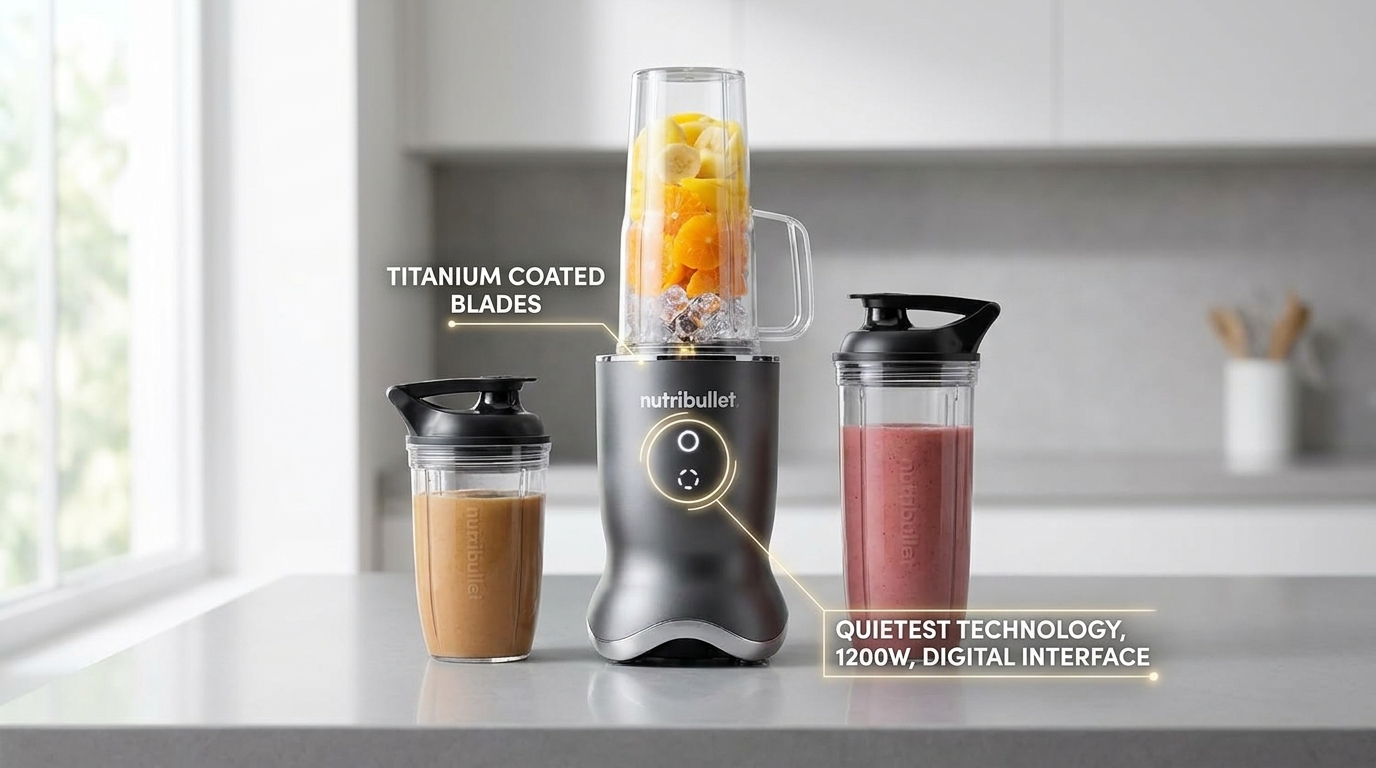
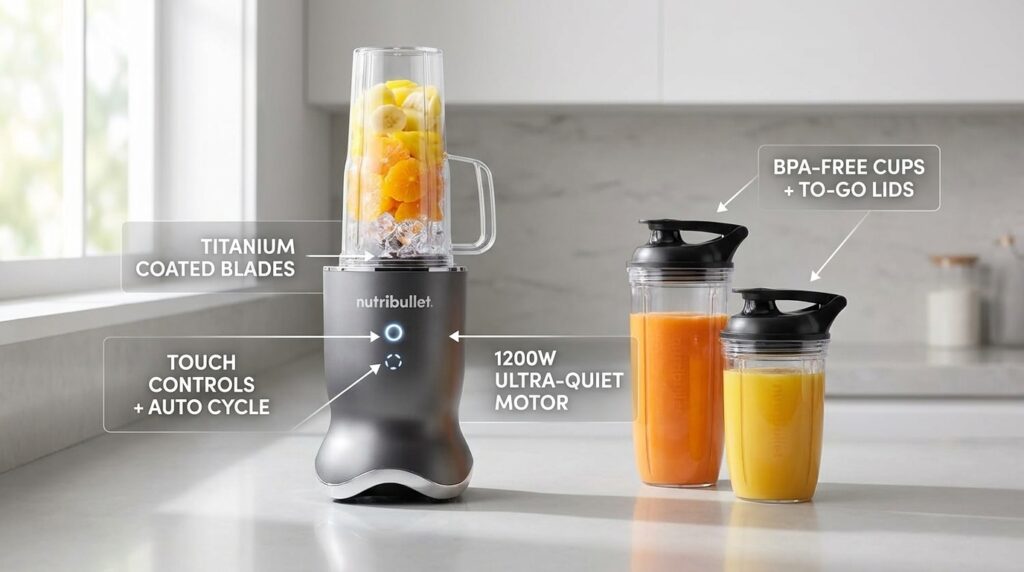
The NutriBullet Ultra is equipped with a 1200-watt motor, which places it in the higher range of personal blender options. This wattage isn’t arbitrary—it reflects the motor’s capacity to process tougher ingredients without stalling or requiring extended blend times. For context, many entry-level personal blenders operate in the 400-600 watt range, while full-sized countertop blenders often feature 1000-1500 watt motors.
A 1200-watt motor can handle leafy greens, frozen fruit, protein powders, and tougher vegetables more efficiently than lower-powered alternatives. This means faster processing times and more uniform blending results, particularly when dealing with frozen ingredients or ice. However, motor wattage tells only part of the story—blade design, container shape, and motor efficiency all influence actual blending performance.
Blade Construction and Design
The titanium-coated blades represent a significant component of this model’s functionality. Titanium coating on blender blades serves a practical purpose: it increases durability and resistance to corrosion compared to standard stainless steel. The coating helps the blades maintain their sharpness over time and reduces the likelihood of degradation from acidic ingredients or frequent use.
The blade configuration itself plays a substantial role in how effectively a blender breaks down ingredients. The design of the blades—their angle, sharpness, and arrangement—determines how efficiently they create the circular motion that breaks apart food. A well-designed blade system creates optimal vortexes within the container, ensuring that ingredients are continuously pulled toward the blades rather than settling at the bottom.
Container Options and Versatility
The NutriBullet Ultra comes with three BPA-free cups in different sizes: a 32-ounce cup and a 24-ounce cup. The inclusion of multiple container sizes reflects different blending scenarios. Larger containers work better when making substantial servings or when you need room for ingredients to move during blending. Smaller containers are useful for portion control, travel scenarios, or when making smaller batches of concentrated mixtures like nut butters or protein concentrates.
BPA-free construction addresses health concerns some users have regarding bisphenol A, a chemical used in certain plastics. While regulatory bodies continue to evaluate BPA safety, many consumers prefer to minimize exposure where practical alternatives exist, making this feature relevant to a segment of potential users.
Lid and Portability Features
The inclusion of to-go lids transforms these blending cups into portable drinkware. This allows users to blend a smoothie, screw on a lid, and take it with them—a practical feature for people who blend at home but consume their smoothies during commutes, at work, or during other activities. The quality and fit of these lids influence whether they actually function well in practice; poorly fitting lids can leak or allow contents to spill if the blender tips over in a bag.
Noise Levels
One of the more distinctive claims about the NutriBullet Ultra is that it operates as “the quietest single-serve blender.” Noise reduction in blenders is a genuine concern for many users, particularly those who blend in early morning or shared living situations. Noise typically comes from motor vibration and the interaction between rapidly moving blades and the container walls.
Achieving lower noise levels while maintaining 1200 watts of motor power requires engineering considerations including vibration dampening, sound-insulating materials, and efficient motor design. Whether the NutriBullet Ultra successfully delivers meaningfully quieter operation than comparable alternatives requires listening to the appliance in real conditions; subjective assessments of “quietness” vary considerably based on individual hearing sensitivity and surrounding environment.
Dishwasher Safety
The NutriBullet Ultra’s components are listed as dishwasher safe, which simplifies cleanup. Blender blade assemblies and containers can be tedious to clean by hand, particularly when dealing with sticky residues from nut butters, protein powders, or thick smoothies. Dishwasher compatibility reduces the friction associated with daily use, making the appliance more convenient for regular users who prioritize cleanup ease.
How the NutriBullet Ultra Can Be Used
Creating Smoothies and Smoothie Bowls
The primary use case for personal blenders remains the creation of drinkable smoothies. The NutriBullet Ultra can process typical smoothie ingredients—frozen and fresh fruit, leafy greens, liquid bases, protein powders, and supplements—into uniform, drinkable mixtures. The 32-ounce container accommodates most standard smoothie recipes without overflow, while still allowing enough headspace for ingredients to blend effectively.
Smoothie bowl preparations represent a slight variation where blended mixtures remain thicker, topped with granola, seeds, coconut, or other toppings. The same blending capacity that produces drinks can create these thicker preparations; the difference lies in ingredient proportions and toppings rather than appliance capability.
Protein Shakes and Post-Workout Beverages
Fitness enthusiasts and people following strength training routines frequently use personal blenders to prepare protein shakes quickly after workouts. These typically combine protein powder, liquid, and sometimes additional ingredients like peanut butter, oats, or fruit. The 1200-watt motor handles protein powders without extended blending times, and the quick processing means less separation of ingredients, resulting in more homogeneous shakes.
Nut and Seed Butters
A capable personal blender can process nuts and seeds into butters through extended blending. The heat generated by friction during processing breaks down cell walls and releases oils, gradually transforming whole nuts into butter-like consistency. This application demands more from a blender than standard smoothie making, as the dense, low-liquid nature of nuts creates more friction and resistance than fruit-based blends.
Whether the NutriBullet Ultra handles this application well depends on factors beyond simple wattage—blade efficiency, container design, and whether the motor can sustain operation under the demands of processing nuts. Many users of personal blenders simply avoid nut butter production and rely on store-bought alternatives or full-sized food processors better suited to the task.
Vegetable-Based Preparations
Soups and vegetable-based drinks represent another use category. The NutriBullet Ultra can process cooked vegetables into soups if warm liquid is incorporated (though using boiling liquid risks damaging plastic components). Raw vegetable blends—like cleansing or detox-oriented drinks—utilize the blender’s capacity to break down tougher plant material into drinkable consistency.
Dressings and Sauces
The processing capability that handles smoothies can also create vinaigrettes, salad dressings, and emulsified sauces. These applications rarely demand extended blending times but benefit from a blender that can efficiently combine separate components into uniform preparations.
Who the NutriBullet Ultra May Be Suitable For
Daily Smoothie Enthusiasts
People who make smoothies several times weekly or more will find the NutriBullet Ultra appropriate for their needs. The combination of processing power and multiple containers means consistent results and the ability to make larger or smaller servings as needed. For individuals for whom smoothie-making is a routine part of their lifestyle, having an appliance optimized for this single application makes sense.
Active Individuals and Fitness-Focused Users
Those who regularly incorporate protein shakes into their fitness routines benefit from a personal blender’s convenience. The ability to quickly prepare shakes at home, at the gym, or elsewhere without commuting to a smoothie shop represents meaningful time savings. The motor power ensures protein powders mix thoroughly without lumps or separation.
People Seeking Dietary Variety
Individuals working to increase vegetable and fruit intake find personal blenders useful for incorporating these foods into drinkable forms, making them easier to consume in larger quantities. The NutriBullet Ultra’s power helps ensure that leafy greens and harder vegetables break down efficiently, creating palatable drinks rather than chunky, unpleasant mixtures.
Space-Conscious Households
Apartments, small homes, or kitchens without significant counter space benefit from personal blenders’ compact footprint. The NutriBullet Ultra, even with three containers, occupies less real estate than full-sized blenders, making it practical for people who want blending capability without dedicating substantial kitchen space to an appliance.
Individuals Prioritizing Noise Levels
People who blend early in the morning or in shared living situations, or simply those who find loud appliances unpleasant, might prioritize quieter operation. If the NutriBullet Ultra genuinely delivers quieter performance than alternatives with similar motor power, this distinction becomes relevant to individuals in these situations.
Budget-Conscious Buyers Seeking Power
Personal blenders at the 1200-watt level tend to occupy a middle price point in the personal blender market. For people who want processing power beyond entry-level models but don’t want to invest in full-sized blenders, this tier represents a practical compromise.
Important Considerations and Limitations
Not a Replacement for Full-Sized Blenders
The NutriBullet Ultra, despite its power, cannot replicate all the capabilities of full-sized countertop blenders. Batch processing multiple servings, creating large quantities of soup, or processing very tough ingredients that might include bones or extremely fibrous materials—these tasks simply fall outside the scope of personal blender design. Anyone requiring these capabilities should consider full-sized alternatives rather than expecting a personal blender to handle them.
Nut Butter and Thick Paste Production
While the 1200-watt motor sounds powerful, not all high-wattage personal blenders effectively produce nut butters or similarly dense preparations. These applications require sustained operation under significant friction and heat, and extended processing times. Some motors and designs aren’t optimized for this demand. User reports and product reviews can provide insight into whether the specific NutriBullet Ultra model actually succeeds at nut butter production or if users typically find it disappointing for this purpose.
Heat Generation During Extended Use
Extended blending sessions, particularly with dense ingredients, generate heat. This heat dissipates through the motor and container walls. While some appliances handle this well, others may shut off as a safety precaution if internal temperatures rise too high, or users may find the container becomes uncomfortably warm to handle. This is more relevant for users planning extended blending sessions rather than quick smoothie preparation.
Container Durability Over Time
Plastic containers, even quality ones, can develop cloudiness, scratches, or minor degradation with repeated use, washing, and exposure to acidic contents. While BPA-free plastic is generally durable, it doesn’t match the longevity of glass or the imperviousness of quality stainless steel containers found in some high-end blenders.
Blade Maintenance and Replacement
The titanium-coated blades eventually dull with use. Unlike some appliance components, replacement blade assemblies for personal blenders can be difficult to source or expensive to replace. Users should understand whether replacement blades are available from the manufacturer or through reliable third parties, and at what cost, before committing to the appliance.
Liquid Requirements
Personal blenders require liquid to function effectively; they cannot process completely dry ingredients like flour or dry spices without some liquid component. This is more of a design limitation than a deficiency, but it’s worth noting for users accustomed to food processors that handle dry ingredients.
Comparing Personal Blender Approaches
Personal Blenders vs. Full-Sized Countertop Blenders
Personal blenders excel at convenience and space efficiency but sacrifice batch capability and raw processing power compared to larger models. Full-sized blenders can process larger quantities, typically feature more robust construction, and handle wider ingredient variety. However, they occupy considerably more space and represent a larger investment. The choice between them depends on household size, frequency of batch processing needs, and available storage space.
High-Wattage Personal Models vs. Entry-Level Alternatives
Higher-wattage personal blenders like the NutriBullet Ultra cost more than entry-level models (typically 400-600 watts) but deliver noticeably faster processing times and better ability to handle frozen ingredients and protein powders. Entry-level models work fine for basic fruit smoothies but may struggle with tougher applications. The wattage difference typically translates to 10-30 extra dollars at retail, making it a relatively modest premium for considerably improved performance.
Multiple Containers vs. Single-Container Models
Some personal blenders come with a single container, while others include multiple sizes. Multiple containers offer flexibility and allow different users within a household to prepare appropriately-sized servings. However, they occupy more storage space and increase the overall cost. For solo users making consistent serving sizes, a single container might suffice.
Practical Usage Scenarios
A Morning Routine
Many potential users imagine starting their morning by adding fruit, greens, protein powder, and liquid to the NutriBullet Ultra, blending briefly, and taking their prepared smoothie to work. This scenario plays to the appliance’s strengths—quick processing, convenient to-go lids, and minimal cleanup compared to preparing this drink through other means.
Post-Gym Preparation
After an early morning workout, preparing a protein shake quickly before showering and starting the day represents another practical scenario. The appliance handles this routine seamlessly, producing a consistent drink in under five minutes including cleanup.
Accommodating Dietary Needs
Individuals eating restrictive diets or dealing with dietary changes can use personal blenders to create meals in drinkable form when whole-food preparations become challenging or when liquid nutrition becomes necessary.
Frequently Asked Questions
How long does a typical smoothie take to blend?
Most smoothie recipes blend in 30-60 seconds with a 1200-watt motor, depending on ingredient composition and how finely you prefer the result. Frozen fruit and tougher ingredients may require slightly longer. In practice, the entire process from assembly through cleanup typically takes under ten minutes.
Can the NutriBullet Ultra handle ice?
Yes. Personal blenders designed for 1000+ watts typically process ice and frozen ingredients effectively. However, extended ice blending creates more noise and generates more heat than fruit-based smoothies. Occasional ice use presents no issues; frequent or extended ice processing may occasionally trigger heat-related motor shutoffs on some models.
Is this suitable for making soup?
The NutriBullet Ultra can technically create soup from cooked vegetables and liquid. However, adding boiling liquid directly risks damaging plastic components. Allowing cooked vegetable mixtures to cool slightly before blending extends the lifespan of the appliance. Full-sized blenders designed specifically for hot ingredients represent a safer choice if soup preparation is a frequent need.
How durable are the plastic containers?
Quality plastic containers like those included with the NutriBullet Ultra typically last several years with normal use. However, they eventually develop minor cloudiness or scratches. They’re not as durable as glass or the plastic used in heavy-duty commercial appliances, but they’re substantially more durable than very low-quality plastic containers.
What’s included beyond the blender base and containers?
The NutriBullet Ultra comes with the motor base, the 32-ounce and 24-ounce containers, blade assembly, and to-go lids. Additional accessories like recipe books or specific tools vary depending on retailer and promotional offers at the time of purchase.
How loud is it compared to other personal blenders?
Specific noise level measurements in decibels aren’t typically published for personal blenders, making direct comparison difficult. The claim that the NutriBullet Ultra is “the quietest” in its category is difficult to verify independently. User reviews often provide more realistic perspective on whether noise levels are genuinely reduced or if the difference is primarily marketing.
Can I use it for nut butter?
This depends significantly on blade design and motor efficiency. Some personal blender motors work well for nut butter after extended blending; others perform poorly or shut down from overheating. Specific user feedback about the NutriBullet Ultra’s performance with nut butter production is more reliable than general assumptions about 1200-watt motors.
Are replacement blades available?
Check with the manufacturer or authorized retailers about blade replacement availability and cost before purchasing. If replacement blades are difficult to source or prohibitively expensive, the long-term value proposition of the appliance changes.
Is there a learning curve for using it?
Personal blenders are quite intuitive. Typically you add ingredients, screw on the container, press the button or toggle setting, and wait. Some users prefer the simplicity of a single-speed button; others appreciate variable speed control or preset settings if the NutriBullet Ultra offers them.
What’s the warranty coverage?
Warranty terms vary by retailer and region. Manufacturer warranties typically cover defects but not damage from misuse or normal wear. Understanding specific warranty terms before purchasing helps set realistic expectations about long-term protection.
Conclusion
The NutriBullet Ultra Personal Blender represents a competent option within the personal blender category, specifically designed for individuals who make blended drinks regularly and want processing power beyond entry-level alternatives. The 1200-watt motor, titanium-coated blades, multiple container options, and to-go lid compatibility address real needs for active blender users.
Whether this particular model is the right choice depends on your specific situation. If you blend smoothies several times weekly, want quick processing, appreciate having multiple container sizes, and have limited kitchen space, the NutriBullet Ultra aligns with these priorities. If you primarily need batch processing capability, plan to make nut butters regularly, or rarely blend drinks, a different appliance type might serve you better.
The marketing claims surrounding “quietest” and superlative language should be evaluated through independent user feedback rather than taken at face value. Similarly, understanding the real-world performance of features like nut butter capability comes from users who have actually used the appliance for these purposes.
Personal blenders have become sufficiently mature as a product category that the differences between models in similar price ranges often come down to specific design choices, motor efficiency, and build quality rather than dramatic performance gaps. The NutriBullet Ultra appears competent in these areas, but that competence doesn’t necessarily translate to being the uniquely superior choice for everyone.
If this appliance aligns with how you actually use a blender—not how you imagine you might use it—and if the features match your realistic needs rather than aspirational goals, then it likely represents a practical addition to your kitchen. You can check more details on Amazon here to review current specifications, see what existing users report about their experiences, and compare it against other options in the personal blender space.