Introduction
Personal blenders have become increasingly popular in kitchens across the country, and for good reason. They’re convenient, space-efficient, and ideal for creating quick meals and beverages without the bulk of a full-sized blender. The Ninja Nutri-Plus Personal Blender represents a particular segment of this market—one that prioritizes portability alongside genuine blending power.
Understanding whether a personal blender suits your lifestyle and needs requires looking beyond marketing claims. This guide explores what the Ninja Nutri-Plus Personal Blender actually offers, how people typically use these machines, and what factors matter when deciding if one makes sense for your kitchen.
Understanding Personal Blender Technology
Before diving into the specifics of this model, it’s helpful to understand what makes personal blenders distinct. Unlike full-sized countertop blenders designed for large batches, personal blenders focus on smaller portions. They typically range from 250 to 1,000 watts of power and work with cups or bottles ranging from 16 to 24 ounces.
The advantage of this category lies in efficiency. Making a single smoothie in a large blender often feels wasteful—you’re heating up a machine and cleaning a large pitcher for one or two servings. Personal blenders eliminate that friction.
The tradeoff involves limitations. These machines generally won’t handle ice as effectively as their larger counterparts, won’t process hot soups as safely, and won’t pulverize whole grains or nuts into flour with the same ease. Recognizing these boundaries helps set realistic expectations.
Key Features and Specifications
Motor Power and Performance
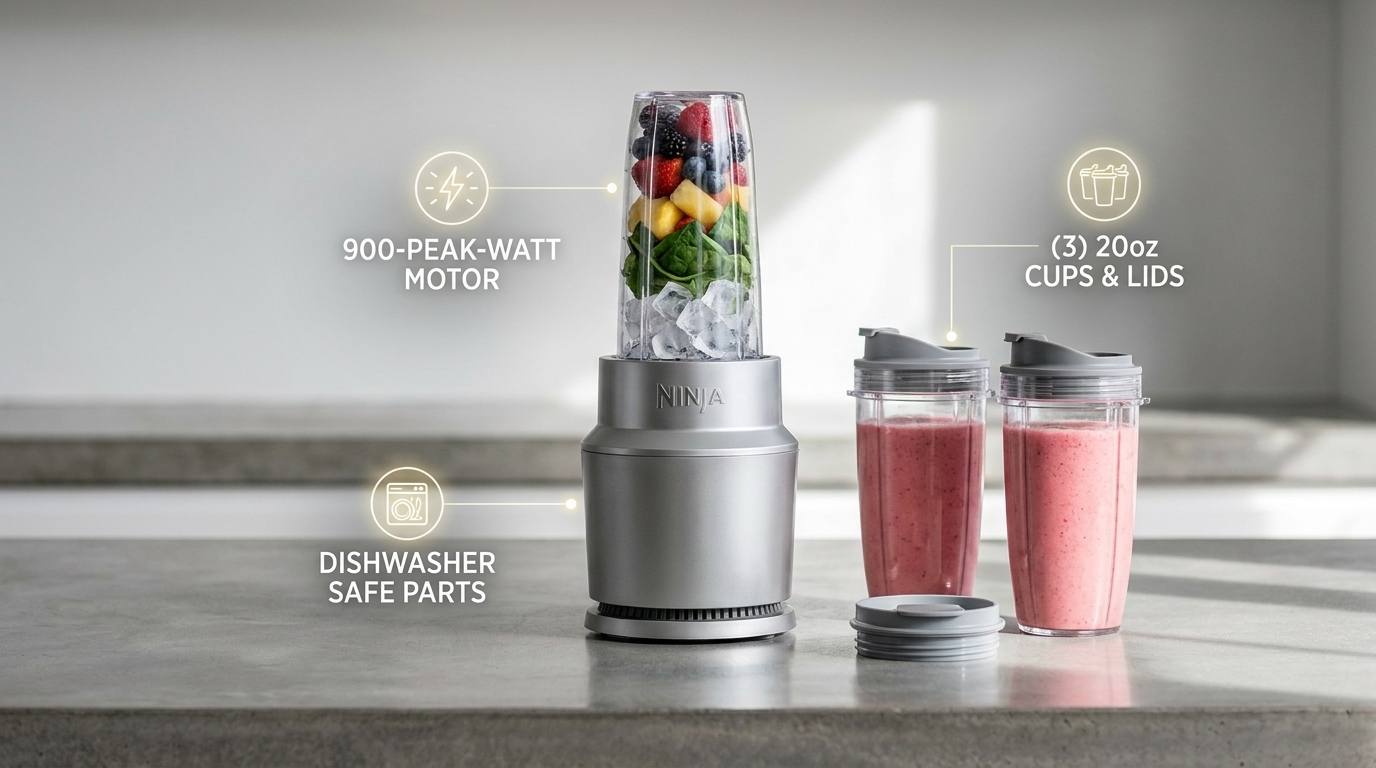
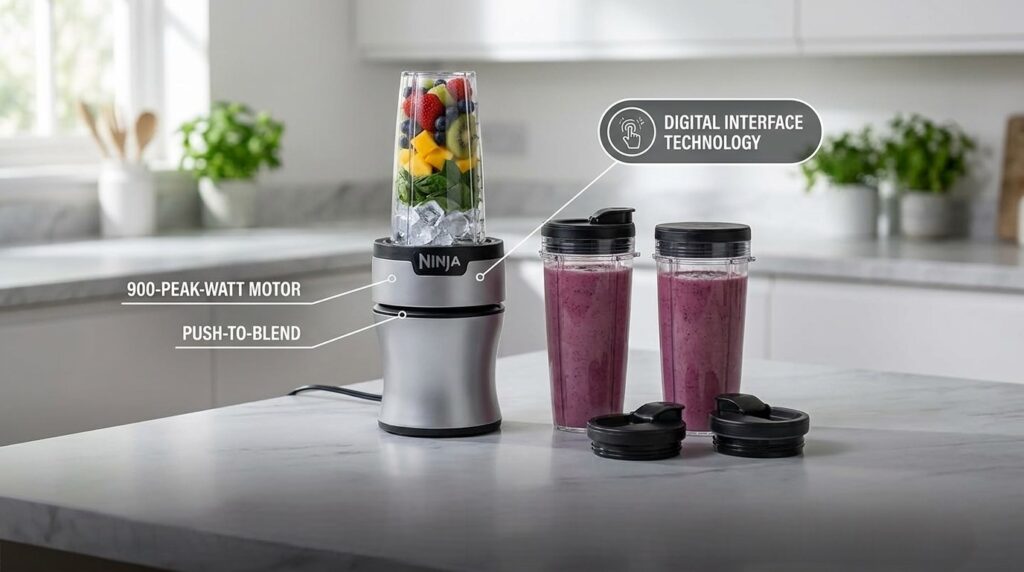
The 900-peak-watt push-to-blend motor represents the core of this machine’s capability. Peak wattage indicates the maximum power the motor generates during operation, typically during the initial startup phase. This differs from continuous wattage, which represents sustainable power over extended blending sessions.
For practical purposes, 900 peak watts positions this model in the upper range of personal blenders. This power level enables processing of soft fruits, leafy greens, and liquids relatively quickly. More demanding tasks—like crushing thick ice or processing raw nuts into butter—fall outside the machine’s optimal performance range.
The push-to-blend design deserves attention. Rather than using buttons to control speed, you simply push down on the handle or cup itself. This approach simplifies operation and reduces the number of moving parts that might fail. It’s also quieter than alternatives, since the motor only engages when you’re actively pushing.
Cup Configuration
This model comes with three 20-ounce cups, which represents a practical capacity for individual servings. Twenty ounces equals approximately 600 milliliters—roughly the size of a standard large smoothie or a small pitcher of juice.
The three-cup setup deserves consideration. It means multiple people can each have their own cup and blender base without needing to wait for refills. Alternatively, one person can prepare multiple servings throughout the day without immediate washing, though dishwasher access changes this calculation.
Lid System
The package includes two spout lids and one storage lid. This matters more than it might initially appear. Spout lids allow you to drink directly from the cup without transferring your smoothie to a separate glass—this reduces cleanup and keeps ingredients at their current temperature longer. The storage lid enables refrigeration of prepared drinks without spills, extending the timeframe for consumption.
Materials and Cleaning
The dishwasher-safe designation applies to the cups, lids, and other removable components. This is meaningful for daily usability. Hand-washing a personal blender pitcher only takes a few minutes, but the convenience of a dishwasher load can influence whether you actually use the machine regularly.
The stainless steel or plastic construction of the motor base (which isn’t submerged) can typically be wiped clean with a damp cloth. The cups themselves appear to be constructed from materials that withstand regular dishwasher cycles without clouding or degradation.
Practical Applications and Usage Scenarios
Smoothie and Protein Shake Preparation
The most straightforward use case involves blending fresh or frozen fruits with liquid bases. Berries, bananas, mangoes, and similar fruits process efficiently into smooth drinks. Adding protein powder, yogurt, or milk creates nutrition-dense smoothies suitable for breakfast or post-workout recovery.
Many people find that having dedicated cups encourages regular smoothie preparation. Rather than washing a large blender pitcher, you simply rinse out a cup or place it in the dishwasher. This convenience factor influences whether the machine gets used consistently or sits idle.
Leafy Green Processing
Incorporating spinach, kale, or other leafy greens into drinks has become standard practice for many households. The motor power in this model handles soft greens reasonably well, particularly when combined with adequate liquid. Tougher greens, very fibrous vegetables, or large quantities present more challenges than a full-sized blender would.
A practical approach involves blending greens with liquid first to create a base, then adding other ingredients. This sequence generally produces smoother results than dumping everything together.
Sauce and Condiment Creation
Beyond beverages, personal blenders work adequately for creating sauces, dressings, and condiments in smaller quantities. Salsa, pesto, hummus, and similar preparations often come together successfully. The push-to-blend mechanism works well for these applications since you can pulse briefly rather than running continuously.
Nut Butters and Spreads
This represents the edge of the machine’s capabilities. Processing nuts into butter requires sustained grinding—the kind that generates significant heat. The Ninja Nutri-Plus’s motor can technically do this, but it’s not an optimal use case. If you regularly make fresh nut butters, a dedicated food processor or full-sized blender might serve you better.
Frozen Fruit Processing
Creating frozen smoothie bowls or processing frozen bananas into soft-serve consistency falls within this machine’s range when you stick to softer frozen fruits. Hard-frozen or ice-heavy preparations push against the motor’s limits and may result in longer blending times or incomplete processing.
Who This Machine May Be Suitable For
Single-Serving Households
If you live alone or only occasionally prepare breakfast items for others, the capacity and portability of a personal blender align well with your actual usage patterns. Full-sized blenders often feel like overkill for one-person households.
People with Limited Counter Space
Urban apartments, dorm rooms, and smaller kitchens sometimes lack space for a full-sized blender. The compact footprint of a personal blender addresses this constraint without sacrificing functionality for basic tasks.
Those Seeking Convenience Over Maximum Versatility
If your primary goal involves quickly preparing smoothies, protein shakes, and simple beverages, the convenience of a dedicated personal system might outweigh the limitations. Some people appreciate having their drinking vessel serve as the blender cup—no separate pitcher to clean, and no separate glass to wash.
Regular Travelers and Mobile Workers
The portability of these systems appeals to people who spend time away from home. Some models designed as personal blenders can literally travel with you, though this specific model is primarily a countertop device.
People Testing Dietary Changes
Those experimenting with smoothie-based diets, green juice routines, or supplemental nutrition through beverages sometimes prefer starting with personal blenders. The smaller financial investment feels less consequential if the habit doesn’t stick.
Important Considerations and Limitations
Ice Processing Capability
This machine isn’t engineered for pure ice crushing. While it can process small amounts of ice mixed with soft fruits or liquid-heavy bases, filling it with frozen ice cubes will likely frustrate you. The motor will strain, processing will be slow, and the results might be chunky rather than smooth.
If frozen margaritas, icy slushes, or ice-based frozen drinks are regular consumption items for you, this limitation matters significantly.
Heat Generation
Blending generates friction heat. With personal blenders’ smaller volumes and high-speed processing, this heat builds quickly. Extended blending sessions with thick ingredients can make the cup uncomfortably warm. You won’t make hot soup in this machine—and shouldn’t attempt it.
Volume Constraints
The 20-ounce capacity works perfectly for individual servings. It becomes constraining if you’re preparing drinks for a household. You’d need to blend multiple batches, which takes time and slightly increases cleanup.
Whole Grain and Nut Processing
While marketed as capable with various ingredients, processing whole grains into flour or creating fine nut powders isn’t where this machine excels. If these applications are important to your cooking, a dedicated food processor or high-powered blender would serve better.
Noise Level
The push-to-blend mechanism reduces noise compared to button-operated personal blenders, but this remains a louder appliance overall. Early morning smoothie preparation might wake others in your household.
General Comparison of Personal Blender Categories
Understanding where this model falls within the broader personal blender landscape helps contextualize its place in the market.
Budget-Conscious Models typically feature motors under 600 watts, basic plastic components, and limited accessories. They excel at simple smoothies but struggle with demanding tasks. They’re appropriate for casual users who want convenience without investment.
Mid-Range Personal Blenders occupy the space where the Ninja Nutri-Plus sits. These machines offer 800-1000 watts of power, include multiple accessories, and handle most common blending tasks adequately. They balance capability with affordability and represent the most popular category.
Premium Personal Blenders feature full-sized motor technology scaled down, multiple speed settings, specialized containers, and additional accessories. They cost significantly more and appeal to enthusiasts or those planning intensive daily use.
Full-Sized Blenders in the household kitchen represent a completely different category. While larger and less portable, they handle larger volumes, process more demanding ingredients, and last longer under heavy use. They’re appropriate for families, meal prep enthusiasts, or those needing genuine versatility.
The Ninja Nutri-Plus positions itself as an accessible entry into the mid-range category, offering respectable power without premium pricing.
Frequently Asked Questions
How long does blending actually take?
Processing time depends entirely on what you’re blending. Soft fruits with liquid might become smooth in 30-60 seconds. Tougher vegetables, thick bases, or frozen ingredients require longer. Most users report typical smoothie preparation taking 1-2 minutes from cup to finished drink.
Can you make hot drinks or soups?
No. The friction heat generated during blending makes the cup too hot to safely handle, and intentionally heating liquid inside a sealed blender creates pressure that could cause problems. Always blend cold or room-temperature ingredients only.
What’s the difference between peak watts and continuous watts?
Peak watts indicate maximum power during startup. Continuous watts reflect sustainable power during operation. Manufacturers often emphasize peak watts because it sounds more impressive. Continuous wattage would be more meaningful for understanding sustained performance, but isn’t always disclosed.
Do you need all three cups, or is one sufficient?
That depends on usage. If only one person uses the machine occasionally, one cup is plenty. If multiple people use it regularly, multiple cups add convenience. The cups are also sold separately if you want to add more later.
How durable is this machine over time?
Personal blenders generally last several years with normal use. The Ninja brand has a reputation for reasonable durability. Major failure points tend to be the motor seal and the blade assembly. Blade degradation from frequent use or grinding on harder particles affects performance before true mechanical failure.
Can you blend hot ingredients?
Blending hot ingredients causes moisture to turn to steam inside the sealed cup, creating pressure. Never blend recently boiled water, hot soup, or steaming ingredients. Wait until everything reaches room temperature.
Is this machine good for making nut butters?
It can create nut butter through extended blending sessions, but it’s not optimal. The motor will work harder and generate significant heat. If making nut butters regularly, a dedicated food processor or full-sized blender would be more efficient.
What’s the warranty coverage?
Warranty specifics vary by retailer and purchase method, but Ninja products typically include a one-year limited manufacturer’s warranty covering defects. This doesn’t cover normal wear, user damage, or intentional misuse. Retailer-specific extended warranties may be available.
Do the cups leak from the spout lids?
The design is intended to seal when properly secured, but no portable cup system is completely leak-proof. Transporting a full cup in a bag still carries some risk of minor leakage if the lid isn’t seated perfectly. The storage lid provides better protection than the spout lids for transportation.
Can you use it for making protein powder drinks?
Yes. Protein powder dissolves or disperses readily in a liquid base, making this a straightforward application. Many people use personal blenders specifically for quick protein shakes post-workout.
What voltage and wattage do you need?
Personal blenders operate on standard household electrical current. You’ll need a standard outlet. International travel requires a voltage converter if your machine is designed for 110V and you’re in a 220V region.
Maintenance and Care
Regular maintenance extends the lifespan of any kitchen appliance. For personal blenders, this mainly involves proper cleaning.
Rinsing immediately after use prevents ingredient residue from hardening inside the cups. A quick rinse under running water with a brush handles most routine cleanup. Dishwasher placement makes regular cleaning convenient enough that you’re more likely to actually do it.
The motor base shouldn’t be submerged. Wipe the outside with a damp cloth. Ensure the motor coupling (where the cup attaches) remains clean and dry—buildup here can prevent proper function.
Blades eventually dull with use, particularly if you frequently grind hard ingredients or ice. Replacing the blade assembly when it stops processing efficiently is more economical than replacing the entire machine. Replacement blade sets are typically available at reasonable cost.
Conclusion
The Ninja Nutri-Plus Personal Blender serves a specific purpose well: creating individual-sized smoothies, shakes, and simple blended drinks conveniently. It represents a practical solution for people whose actual usage pattern calls for small-quantity blending without the countertop footprint of a full-sized machine.
The 900-peak-watt motor provides genuine capability within the personal blender category. The three-cup configuration addresses the needs of multiple people or the same person throughout the day. The dishwasher-safe design removes friction from the cleaning process, encouraging regular use. The push-to-blend mechanism simplifies operation while reducing noise.
Understanding what this machine isn’t matters equally. It won’t replace a food processor for chopping tasks, won’t rival a full-sized blender for demanding applications, and won’t perform optimally with hard frozen ice or whole grains. These aren’t flaws per se—they’re simply the inherent boundaries of the personal blender category.
Deciding whether this machine belongs in your kitchen depends on honest assessment of how you actually prepare food and beverages. If you regularly make individual smoothies, appreciate the convenience factor, and have limited counter space, the features and capabilities align with your needs. If you need maximum versatility or frequently prepare beverages for groups, this tool’s limitations become more apparent.